


Products & Cases
Products

Energy-saving, anti-fog cooling tower
Standard model: 500–6,000 m³/h (modular design, supports parallel expansion with multiple towers)
Category:
Energy-saving and fog-reducing cooling tower
Keywords:
Mist-eliminating and Water-saving Cooling Tower
Energy-saving, anti-fog cooling tower Details
Flow and Circulation Parameters
Single-tower cooling water flow range
Standard model: 500–6,000 m³/h (modular design, supports parallel expansion with multiple towers)
Large industrial towers: up to 5,500 m³/h (SCC‑X series, single module)
Pipe diameter and head lift
Excellent resistance to water pressure, with a diamond‑shaped heat‑exchange module that optimizes flow resistance.
The water distribution system employs multi-layer low-pressure nozzles to ensure uniform distribution and water conservation.
Operating conditions and temperature parameters
Standard operating conditions
Temperature reduction range: 5–10°C (operating mode adjusted according to the season)
Wet-bulb temperature requirement: The design basis is generally ≤28°C.
Maximum inlet water temperature: Supports 60°C (switches to standard cooling mode in summer)
Environmental adaptability
Winter Mode: Mixes warm, humid air with dry, cold air to eliminate plumes and save 15–20% water.
Summer mode: De‑fogging is disabled, with priority given to cooling efficiency.
Structural parameters
Core component
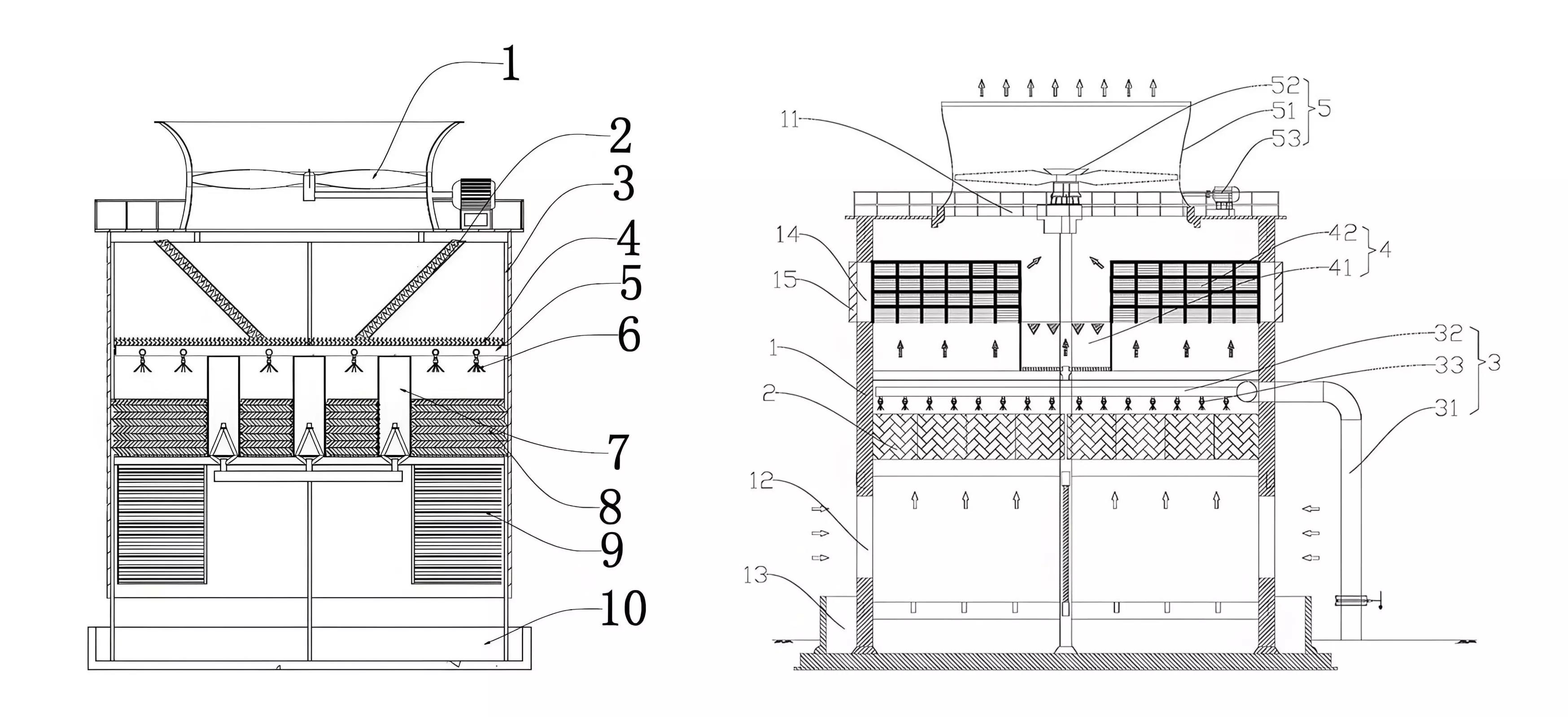
Defogging Module: Diamond‑shaped Heat Exchanger Design (Using Superconducting Carbon Material with Excellent Thermal Conductivity)
Filler: inclined trapezoidal corrugations/special condensation module, with high heat transfer efficiency.
Fan: Axial-flow, diameter 2400 mm (for certain models)
Materials and Weight
Tower body: Fiberglass shell (corrosion-resistant); frame options include steel or concrete structures.
Weight: The empty weight of a large tower can reach several tons (specific model data must be verified with the manufacturer).
Performance and Power Consumption
Fog removal and water-saving capabilities
Annual average water savings: 15–20% (via condensation and recovery of humid air)
Plume elimination rate: In winter, it can completely eliminate visual pollution.
Energy consumption characteristics
Summer operating power consumption is comparable to that of conventional industrial cooling towers (with the heat exchange module switched to the hot aisle).
The additional energy consumption of the winter defogging mode needs to be optimized in conjunction with the fan’s power consumption.
Application Scenarios and Key Selection Considerations
Applicable Fields
Power plants, coal chemical industry, and iron and steel metallurgy (requiring high‑flow demisting)
Urban architecture, commercial complexes (low-noise, water-saving requirements)
Key Selection Factors
Key parameters: circulating water flow rate, wet-bulb temperature, and water-saving rate.
Scalability: The modular design supports future capacity expansion.
Precautions
Environmental Compatibility: In cold northern regions, the antifreeze design of the condensing module must be optimized.
Operation and Maintenance: Regularly clean the heat exchange module to prevent clogging (which can reduce water-saving efficiency).
Noise Control: Optimized inlet and outlet noise reduction devices (some models meet low-noise standards)
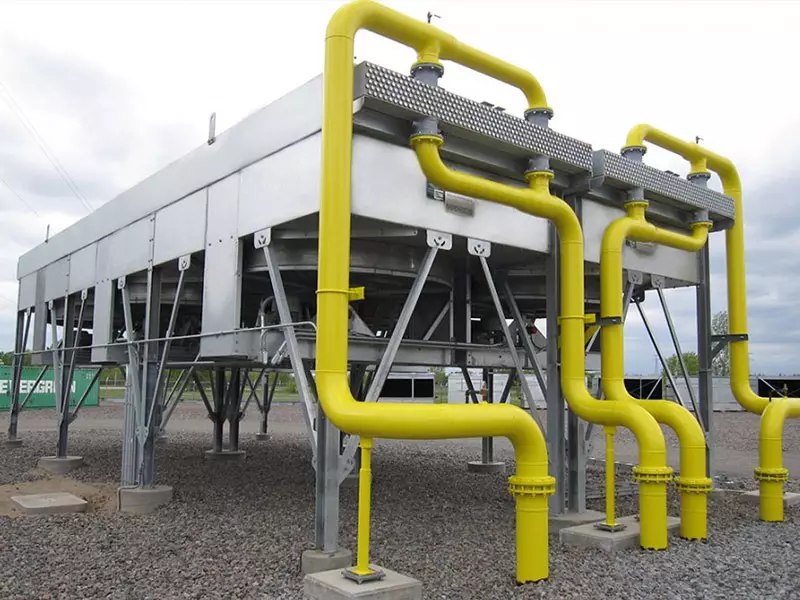
Equipment Diagram
Related Products
Online consultation
Focusing on efficient and energy-saving cooling system solutions
Contact Us
Address:Anqiu City, Weifang City, Shandong Province, China